
INTERVIEW: DULCEDELETI
With debates around overconsumption constantly rising online, it’s easy to forget that objects hold stories, comfort, and connection. In this conversation, Leti reflects on the difference between consuming and collecting, how gender shapes the way people judge hobbies, and why creating a life that feels authentic matters more than curating one for the algorithm.
Written by Julianna Riccioli

The concepts of consumption and overconsumption have had more than their fair share of face time in social media circles.
Some critiques ring true. We live in a microwave culture where we expect instant gratification, constant upgrading, and endless novelty, which can have serious societal and environmental consequences. Consumerism is an ouroboros of wanting more.
At the same time, these conversations can be draining for another reason, and leave people feeling uneasy. The protestors of consumption tend to flatten all forms of collecting, decorating, and self-expression into the same category of excess. The joy of surrounding yourself with objects that tell a story, spark a memory, or simply make an ordinary day feel a little softer often gets squished down into a moral failing. As an adult with a job -- can one own a collection of Calico Critters and not be judged for it? To be able to find emotional attachment to items can be a prize itself
Yet, there’s also a pattern in who gets criticized.
Many of the most visible conversations around problematic consumption focus on products deemed traditionally feminine: clothing, skincare, makeup, shoes, seasonal decor, stationary, etc. Waves of content exist to mock women for spending money how they want, and yet, when men accumulate things, the language can be quick to shift to neutrality, or even lean congratulatory.
Traditionally masculine items, when accumulated and showcased in bulk, are praised as passions, expertise, and investments. A garage full of tools becomes a hobby, and thousands spent on car modifications or sports memorabilia or Pokemon cards is devotion to one’s interests.
Of course, anyone can overconsume. Excess isn’t gendered. The point isn’t that men buy less, but that we’re often more willing to view their purchases as purposeful, while women’s purchases are dismissed as frivolous. There’s enough critique on overconsumption already without adding a gendered component, but it’s inevitable with the internet that it becomes a factor.
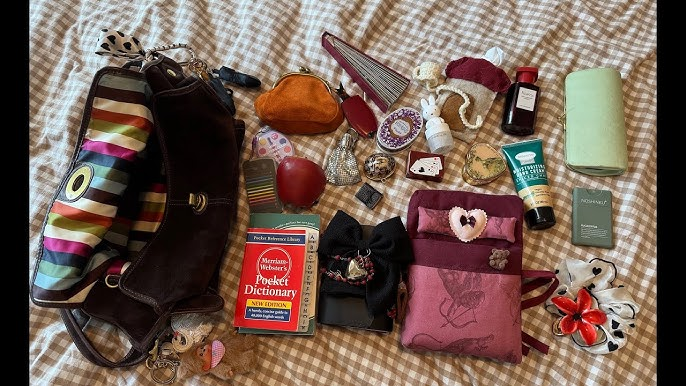
That’s exactly why I wanted to chat with Leti, otherwise known as Dulcedeleti, is a cozy content creator whose videos focus on stationary, thrift shop and antique mall hauls, what’s-in-my-bag tours, and vlogs. She’s spoken out about the selective, gendered critique of overconsumption, and our interview dives into her opinions on overconsumption culture, objects, thrifting, and finding meaning in the little things.
Off Radar: For anyone who may be discovering your content for the first time, how did it originally begin? How has your vision for it changed over the years?
Leti: I first started creating content on YouTube during the good ol' beauty guru days; focusing on cruelty-free lifestyle and beauty as I transitioned to a mostly plant-based lifestyle. As an immigrant from Brazil (and also part Peruvian), I noticed how important decolonizing our lives was and decided to start with my diet and purchases. As with most fun hobbies, my full-time job at the airport drained me of any free time and energy and slowly my channel began to dissipate. I stayed social via other apps, but stopped producing as much long-form content. When TikTok came along, my account began gaining a lot of traction.
As lovely as that was, the brain rot was real. I couldn't find a good balance, got tired of short-form videos messing with my dopamine levels and AuDHD, and decided to start making long-form content on YouTube again. My goal was to not have a goal. I did not want to hit any stats, or produce any specific type of content. I wanted a space where I could be vulnerable, find community and post realistic videos while sharing what I love without the pressure of bowing to any algorithm or fast-paced editing.
Off Radar: What got you into collecting, whether it was as a kid or as an adult with the funds to gather beautiful little things?
Leti: As most women, I was diagnosed AuDHD very late in life. I always had hyperfixations and strange interests that often led me to being heavily bullied and made fun of. When I started "unmasking" as an adult, I decided to finally live my life without fear of judgment. I once heard "someone's opinion of me is none of my business" and it just really stuck with me. I did not know what safety was, and had to create it for myself. I fought too hard for this peace to allow others' projections to disturb it, and fully believe in honoring our inner child; especially if yours was taken away too soon.
Off Radar: Have you felt pressure to justify your collections to other people or defend why certain objects matter to you?
Leti: Absolutely. I am told constantly that what I show is useless or ridiculous, but I've always believed in letting people (figuratively) choke rather than shrinking oneself to be more easily digestible. I think our exposure to mass information at such large quantities has caused a sort of panic to form a black or white opinion without nuance. We see something and want to immediately take sides rather than just subjectively have healthier thoughts and move on from what does not serve us. What I've realized as I age is that it's never personal…someone will always find something wrong with what you are doing.
Off Radar: As you’ve gotten older, has your approach to collecting/your relationship with thrifting and purchasing changed?
Leti: I'll try not to be too long-winded here as the aging subject has been heavily on my mind as of late. Next year I'll be 40, which still makes no sense to me. I relate a lot to people who feel as if they are not where they expected to be at a certain age, but I have also realized through dismantling this capitalist system and sifting through the bullshit of the corporate world- built to keep us on the hamster wheel- that I don't really want to find validation through my career or accomplishments anymore. I don't need to impress anyone with superficial goods that reflect a certain status. I think this has made me enjoy collecting items as a much more meaningful and authentic intentional act. I see it as appreciating beautiful objects that bring me joy, as if I'm adopting little parts of myself I was once ashamed of into a home I worked hard to craft. I don't do so in replacement of anything (although a dopamine hit here and there never hurts).
Off Radar: Similarly, as you’ve moved living spaces over the years, do you view your items in a different light when it is grounded in growing up, especially when you have vintage and antique bits ‘n bobs that come from those before you, who revered their personal items with such intent as well?
Leti: I love this question SO much. I think finding a sense of childish whimsy can truly save us from the depths of depression. As someone with clinical anxiety, depression and CPTSD, I tend to find a lot of meaning in things others may overlook. I'm not sure if it's a sort of trauma response, but it's at least one that has helped rather than harmed me along the way. I love the concept of everyone being museums of bits from everyone they've ever met, and there's something beautiful in sharing that through secondhand finds. I love daydreaming about the stories behind certain objects, especially as an immigrant that had to leave so many of her own childhood things behind. Sometimes when our physical home is gone, we borrow others' by honoring their story as we create our own.
Off Radar: Your content often celebrates vintage objects and meaningful possessions. How do you personally navigate conversations around consumerism and overconsumption?
Leti: I always go back to one main thing: blame the corporation and not the individual. When we turn against each other, we are doing exactly what a fascist system wants us to do. Much like the patriarchy causing women to be in competition with one another, I think there needs to be a balance within the conversation. It doesn't mean not holding ourselves accountable – I just think that although there is absolutely an issue of overconsumption and consumerism, we also earn our wages (often overworked and underpaid ones at that) and should not feel guilt for using them as we see fit. I personally choose to mostly support small shops and buy secondhand, but I am not immune to the occasional bad habit. A lot of money is invested in keeping us stuck to the algorithms that manipulate our psyches, and until we start holding these companies and apps more accountable we will just fuel the very thing we choose to escape from. For example, I cannot ever consume nearly as much as a rich elite does in a day even in the span of my year.
Frankly, if we were all paid a livable wage it would not feel as if we are overconsuming. We are just so used to being thrown breadcrumbs that owning a bakery feels far-fetched; the reality is we deserve both.
Off Radar: You've spoken before about the different ways people respond to men's and women's hobbies. Can you go deeper into why you think men and women experience different treatment in regards to overconsumption criticism?
Leti: When a man is a normal father and not just a glorified babysitter he is praised; when a woman is a single mom they are shamed. Women also experience higher rates of medical negligence through misdiagnosis and delayed treatment. We are constantly dismissed and invalidated; these double standards exist in so many ways and directly leak into our conversations of consumption. We've been conditioned to think only certain things have validity financially, and most of them revolve around "masculine" hobbies. As a man, if I wanted to get an expensive car to mask my lack of identity no one would think twice. In fact, they'd be impressed with my status and worth. I could collect them like Pokémon without others thinking I deserve any less. Meanwhile I cannot buy an "expensive" planner with fun accessories because it's dismissed as frivolous and shallow. We have a self-righteous obsession with things having to make logical sense to complete strangers in order to be deemed worthy.
Off Radar: Would you consider yourself someone who attaches meaning to everyday objects?
Leti: I am definitely the friend that names their inanimate objects. I think it's okay to honor items with intention; it helps us appreciate what we have more. To me, practicing gratitude extends into actually feeling connections to what is around me.
Off Radar: Do you think we're becoming more or less sentimental about physical objects as more of our lives move online, but buying has become easier?
Leti: I think the issue is mostly how much less potential things have to be sentimental when they're so mass-produced and easily accessible. If you travel to another country and have a conversation with a complete stranger for an hour that hands you a rock from his bag that he says he collected from a nearby river, this item will hold so much more value and deep sentiment. But the package you ordered from Amazon will probably end up in a landfill once it breaks down or no longer matches your current aesthetic. We are curating rather than creating, and it's leading to an almost fabricated version of whimsy. With the rise of AI, artists and small businesses are constantly under threat from their creativity being stolen, and I think it's more important now than ever to be more aware of how this permeates into our habits. I always tell people to not ask me where I got things and instead just take inspiration to find their own versions of said things.
Off Radar: Do you think that the internet/reselling platforms are a net good or net bad for thrifters/collectors?
Leti: I actually just vented about this on Instagram, haha. I'll start by saying I'm not anti-reseller, I'm anti-establishment. I was also a reseller with a vintage shop for a short time, and sell things here and there on Depop. That said, I absolutely think there are unethical resellers price gouging and exploiting their communities, which is (one of the factors) causing thrifting to be less accessible to marginalized people. Is it the thrift stores' fault for raising prices? Absolutely. But at some point resellers need to have some sort of moral compass so as to not perpetuate the very system causing them to have to make ends meet this way. It starts to come at the expense of people that do not have the means to do the same, and becomes very anti-community. Like one of my followers stated, it is especially frustrating when it's done by men exploiting women's interests. I wish we could let things be fun and accessible without them having to become a source of financial gain.
Off Radar:How do you think social media has influenced the way people view collecting, decorating, and having hobbies in general?
Leti: I think the more time we spend online, the more we lose our sense of self. And I don't mean this in some pretentious individualistic way; it's great to find community within hobbies and like-minded people. The issue to me is something I had mentioned previously; curating rather than creating. We see trends and people's belongings and want to replicate it rather than be inspired by it. We might even buy something because we've been convinced it's cool or chic, but realistically we don't even enjoy or like it. Creating a space you are proud of and love can only be genuinely done when you are learning about yourself more, rather than by the performance of who you want to be perceived as. We long for y2k nostalgic cool vibe without realizing how much of the boring copy paste shit we perpetuate ourselves. Being exposed to so many people at once has made us more scared to be cringe, and that's something I refuse to allow to dictate my life.
Off Radar: What are your thoughts on the rise of de-influencing? Do you think it's helped people become more intentional, or has it sometimes turned into a different kind of judgment? (I'm especially thinking about trends like the "analog bag" conversation that's been circulating recently, and as you’ve talked about in your videos!)
Leti: I think trends like these start off with good intentions; let's take control of our own bad habits and find ways around the fixations these algorithms cause us to have. But we want so badly to find a fix that we lose our sense of critical thought to notice when it's just propaganda getting to us again. Corporations will always find a way to buy into the trend, even if that trend is being anti-corporation. If they can get you to spend money on the exact thing keeping you tethered to them, they will. So we buy more stuff. Analog bags, flip phones, apps, etc. And don't get me wrong, I fully support someone buying items that genuinely help them break their bad habits- I just fear sometimes we aren't taking into consideration what will actually help us personally and fit into our daily lives the best. We think there's a code to be cracked when really we have to create the code ourselves. As a neurodivergent person, I have often learned this the hard way.
Off Radar: Do you think part of the magic of thrifting comes from not knowing what you'll find? Is the search itself what gives an object some of its meaning?
Leti: Fuck. Yes. A thousand times, yes. There are times when I was at my lowest, and maybe thinking of a friend I missed... and I found something so specifically niche that I know they'll love. Suddenly my day is better, and I have a gift to give someone I want to reconnect with. Sometimes the best things I own are those I find through the lack of planning and expectation. It allows creativity to manifest itself in a deeper, more organic form.
Off Radar: For someone who wants to build a wardrobe, a bag, a home, or a life that feels uniquely their own, where would you tell them to start?
Leti: I would say to first free yourself from any specific "core" you think you may need to follow rules for. Cottage-core, dark academia, etc. Expand your mind knowing that it's okay to just enjoy whatever it is you are feeling in that moment without the pressures of permanency. We ebb and flow daily, and leaning into that wave rather than fighting it is key. Look through magazines, read more books, travel to a nearby park; have experiences that show you what you do and don't like, and let the items be the second thought that merely adds to said experiences.
Off Radar: Is there anything else you’d like to add to the conversation?
Leti: I think I'd just want to reinforce that I don't like to pretend to have all of the answers. I'm okay with making mistakes. That's something that causes a lot of more authentic creators to hide; the fear of being perceived and judged, and the lack of support. I think we all need to allow ourselves and others to be human more often, and look inward when something we see online triggers us. To watch longer videos and give people that normally wouldn't have a chance. I hope there is a beautiful renaissance filled with creatives and weirdos that have been too scared to show themselves due to a saturation of "competition" and elitism. We need each other now more than ever.
****
A final post-interview note from the writer: Leti asked to include a message to creatives in the last paragraph. She emailed to ask people to “credit their inspirations. When creatives aren’t credited it can cause them to want to share less and hide again… so much copying happening, not enough crediting and collaboration.”
Subscribe to dulcedeleti on YouTube and follow her on Instagram.
This interview has been edited minimally for clarity and length.